
Many parents report that their autistic child hardly talks about dreams in the morning – while siblings talk vividly about adventures, strange places or invented characters. This is sometimes interpreted as an indication of limited imagination, which is not true. The dream life of autistic children simply follows a different logic.
What do autistic children actually dream about?
The part of the brain that is particularly active during dreaming is also responsible for acting out social situations and empathising with other people. In many autistic people, this network works differently and this is also evident in sleep. Dreams often contain fewer social storylines and fewer strangers or more emotional encounters. Instead, special interests appear disproportionately often: People who are obsessed with trains, prime numbers or a particular game during the day often encounter these topics at night too.
This ultimately reflects what the brain deals with when it is left to its own devices. And this is often different in autistic people than in neurotypical people.
Why is it so difficult for many autistic children to fall asleep?
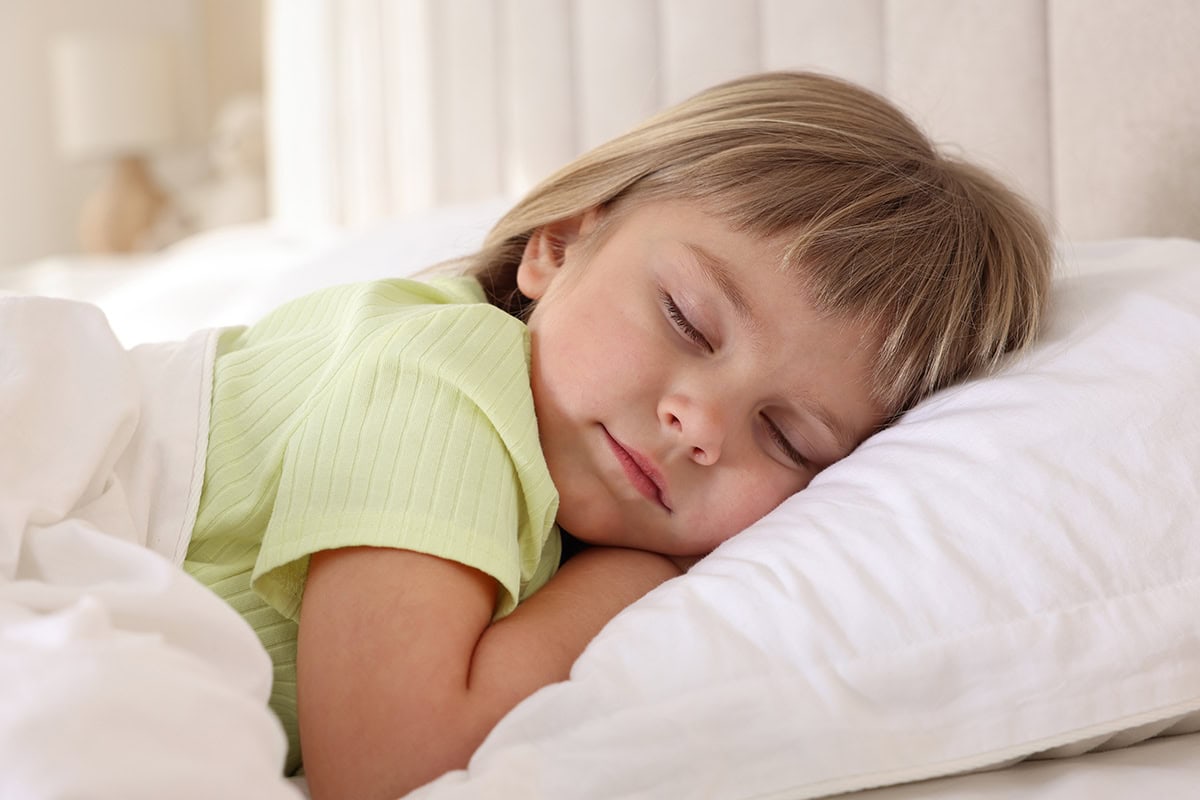
Many autistic children don’t sleep badly because they are hyper or restless – the brain simply finds it harder to rest after a long day full of stimuli, social calibration and sensory impressions. In addition, falling asleep is a transition – and transitions are generally more difficult for many people on the spectrum than for others.
Experience has shown that what makes the difference is a predictable evening routine, a sensory-adapted sleeping environment (e.g. weighted blanket, darkening, absence of unexpected noises) and the knowledge of what comes next. When these conditions are right, many autistic children sleep much better.
More from JuCare?Are you interested in a therapy or would you like to apply for one? Click here to and find out more or contact If you don’t want to miss anything in the future, you can simply sign up for the newsletter and stay up to date.