
Creativity in autism: not the cliché, but real life
When it comes to “autism and art”, many texts immediately slip into extremes. Either every drawing becomes a miracle, or creativity is only explained as therapy. In between lies what families and professionals see much more often in everyday life: Arts and crafts as a reliable channel to express themselves, to calm down or simply to have fun. Sometimes there is talent behind it, sometimes simply a good feeling with clear processes. Both are valuable.
Why visual and material work often go well together
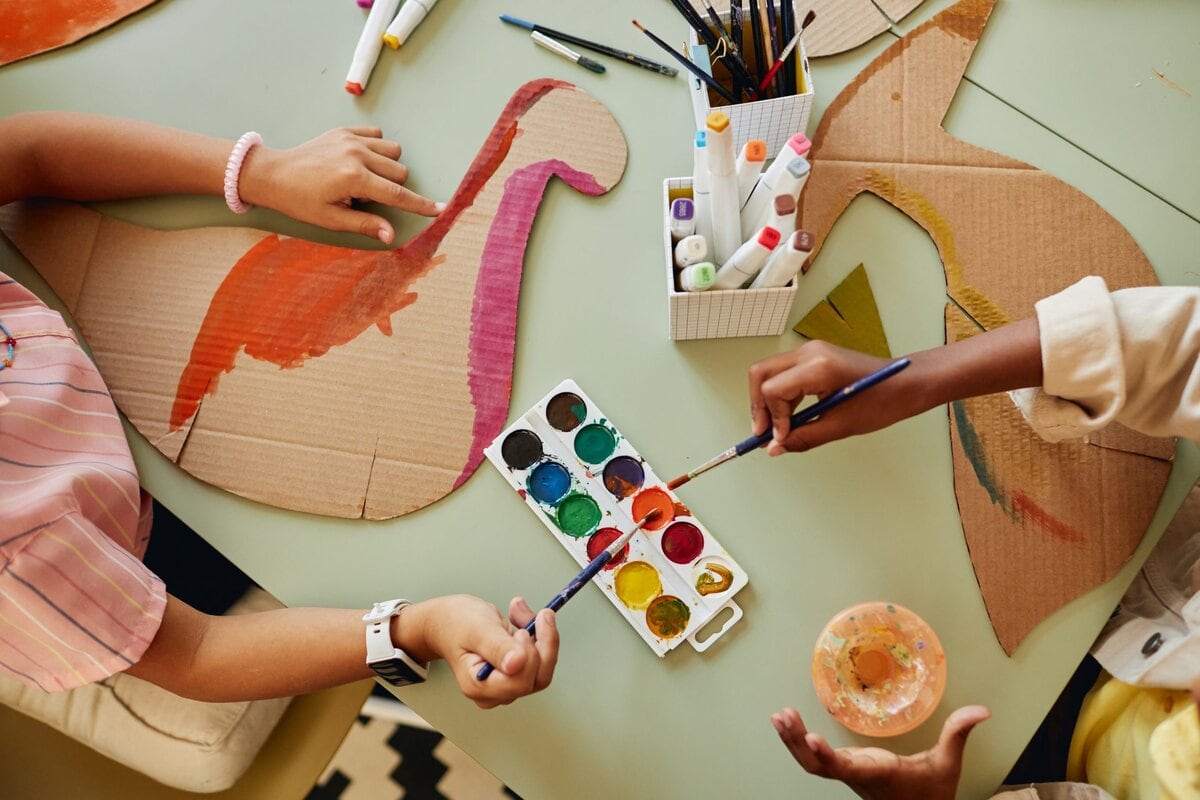
Art has one major advantage: it doesn’t have to use language. Colors, shapes, materials and repetitions can express something that is not tangible in words. Art therapy approaches also emphasise that many people with autism are easily accessible via the visual channel and that visible materials can use precisely this strength.
This does not mean that “everyone” is visual or that “everyone” wants to paint. It just means that art opens up avenues that are less dependent on social expectations.
Craft, patterns, repetition: when structure becomes creative
Not every creative activity is wild and spontaneous. For some, it’s the other way around. Repetition can be calming. Patterns can be fun. Building something, gluing, folding, sanding, sorting, step by step. It’s creative, even if it seems strict. And it can be very satisfying because you can control the process.
Craft projects also provide clear roles: This part belongs here. This step comes now. As a result, many experience less uncertainty than in open, unstructured group activities.
Design creative offerings appropriately: Calm, clear, self-determined
When art “goes wrong”, it is often not due to the person, but to the setting. Too many materials at once. Too loud. Too many people. Too many rules that are not explained. Quiet, uncluttered settings often work better: few materials, a clear selection, a space with distance, the opportunity to withdraw briefly without being commented on.
And very important: no demonstrations. Some like to show their results, others don’t. Art is not automatically communication to the outside world. It can also simply be private.
Are you looking for professional support for autistic children and young people?
JuCare supports families and professionals with sound expertise – practical, individual and at eye level. Take a look at what we offer: you can find an initial overview on the JuCare website. And if you are specifically looking for therapeutic support, you will find all the information you need directly on our autism therapy page.