

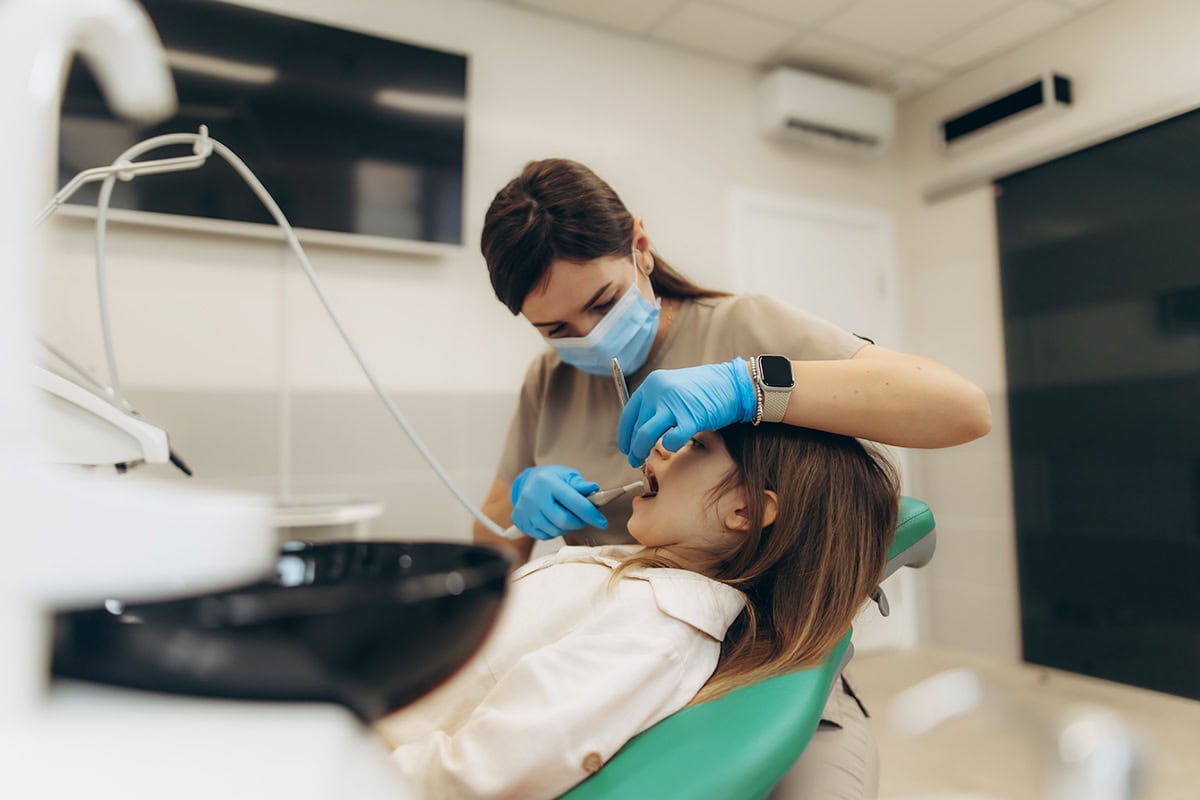
In many families, a dentist appointment is marked on the calendar weeks in advance — and it’s something that makes everyone feel anxious. For children with autism, such visits often end in tears, clenched jaws, or attempts to push the dental instruments out of their mouths. An American study investigated whether this could be changed by redesigning the treatment room.
Why is a visit to the dentist so difficult to endure?
Because it brings together almost everything that can overwhelm a sensitive nervous system. Bright fluorescent lights shine from above, the dentist’s tools hum at a frequency that resonates throughout the entire skull, the chair tilts backward, and unfamiliar hands work inside one’s mouth. For a child — who already perceives stimuli without any filtering — all of this can be completely overwhelming. What might look from the outside like panic or resistance is often an attempt to put an end to a situation that is physically near unbearable.
What exactly did the study entail?
162 children aged six to twelve each underwent two dental cleanings — one in a standard treatment room and one in a sensory-adapted environment. In the sensory-adapted setting, the lighting was dimmed using blackout curtains, while the dentists used magnifying loupes with integrated lights. Slow-motion underwater footage or a display of colors reminiscent of a lava lamp was projected onto the ceiling, accompanied by gentle nature sounds and piano music. A heavy X-ray protective apron was placed over the child’s chest, and a cloth was wrapped around both the chair and the child, creating a sensation similar to a hug. Using electrodes attached to the children’s fingers, the researchers measured the stress response of the nervous system. The results were clear: in the adapted environment, physical stress was measurably lower, and defensive behavior also decreased noticeably.
What does this mean for the next appointment?
Above all, it means that a great deal can be achieved with very little effort. The adjustments cost almost nothing, required no special instruction, and did not extend the duration of the treatment. Younger children and those who find verbal communication more challenging benefited the most. It is therefore worth it for parents to ask at the dental or medical practice whether the lights can be dimmed, whether they may bring their own headphones, or whether a lead apron can be used even when no X-ray is being taken.
Want more from JuCare?
What applies at the dentist’s office also holds true in many other everyday situations: small adjustments can make all the difference. You can learn how we support children and families in this regard to our autism therapy page. You can also request therapy directly here.
For regular insights into the world of autism, check out our newsletter and follow us on Instagram.