

When the school day turns upside down – what school support really means
Support plans often refer to teaching situations. What tasks the child is given, what the seating arrangement looks like, whether the child needs breaks. That’s right and important. But anyone who knows school support knows that the moment when everything tips over rarely happens during lessons.
What actually happens on the playground, in the canteen and in the corridor
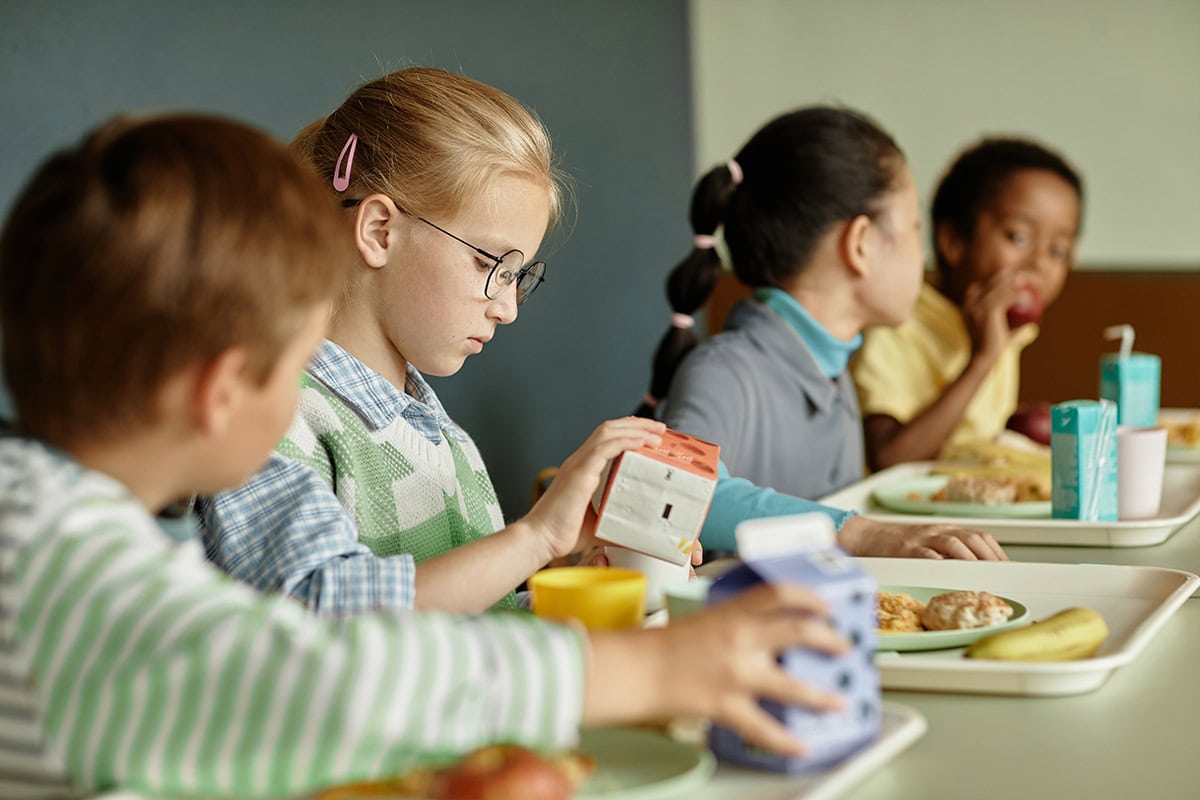
The canteen at lunchtime: hundreds of children at the same time, cutlery clattering on trays, a babble of voices from all directions and the smells of food mingling. What’s more, there are no fixed seating arrangements or continuous adult supervision. For some children on the spectrum, this situation can be very challenging.
What good school support means in these moments
No one should be forced to spend their break in a playground that can feel like a train station at rush hour. If a child prefers to spend the break in the school library or in an empty classroom, this is not a withdrawal from school life but a form of regulation.
A supportive school companion tries to take these places and moments into consideration. She knows that the playground on Tuesday is reasonably bearable because a certain group of children regularly play soccer there and make the area reasonably predictable. And that Friday is different because the older age groups come out there.
Why good support often goes unnoticed
There are school support staff who always sit next to the child, comment on every situation and intercept every conflict before it arises. To outsiders, this feels like a lot of work. And it is. But it’s not always what helps the child. The moments when school support is really visible often look unspectacular from the outside: The accompanying person is standing three meters away, looking in a different direction, and the child settles a minor situation with a classmate themselves. Or she has led the child out of the canteen early – not because a conflict was imminent, but because she noticed that the child was showing the first signs of being overwhelmed. These are the decisions that nobody notices but that carry the school day.
Would you like to find out more?
If you are interested in school support, you can find more information on our website. Stay up to date with our newsletter or follow us on Instagram for insights from everyday life!