
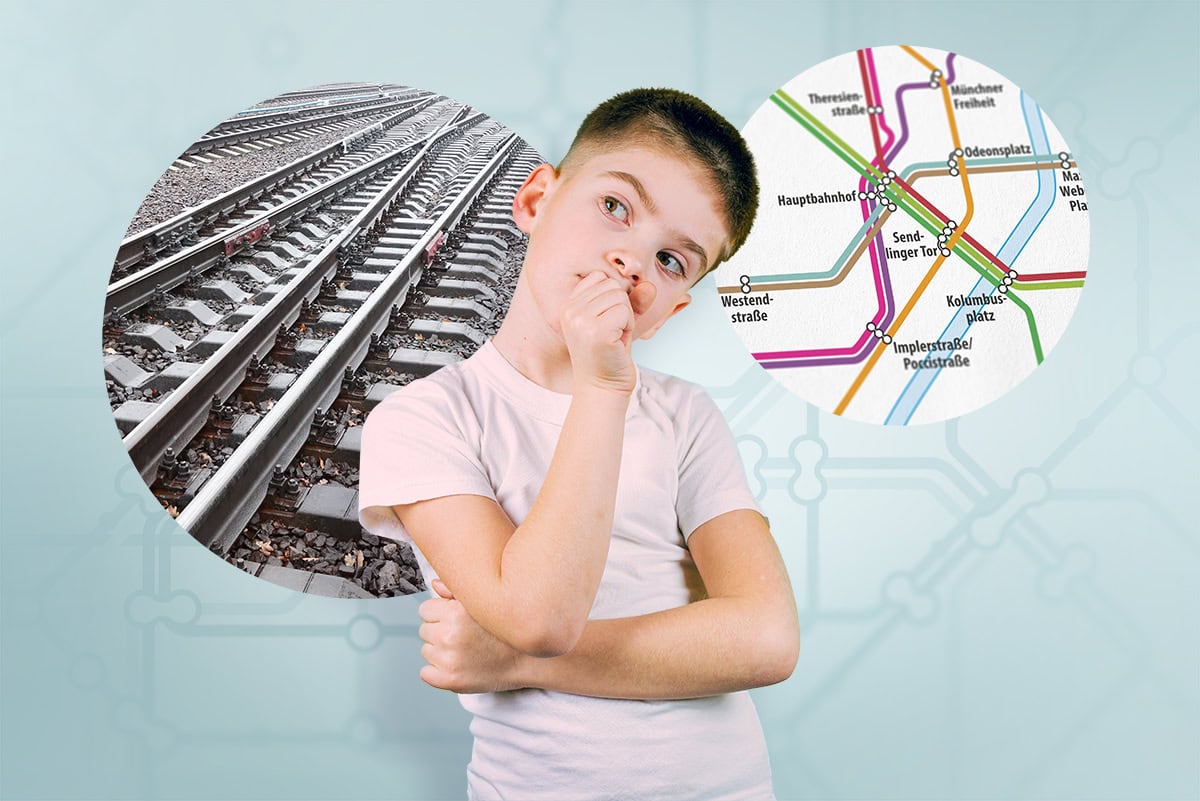
Train schedules from the 1980s, the exact number of species in a particular beetle family, or every station on the London Underground—people with autism can amass a level of knowledge in areas that others consider trivial or useless that puts experts to shame. There’s a name for this: special interests. And there’s more to it than just a quirk.
Where does this knowledge come from?
In the brains of people with autism, smaller, adjacent regions are particularly densely interconnected—while more distant regions are barely connected at all. At first glance, this sounds like a disadvantage. And it is—except for this one exception: details are perceived with extraordinary clarity, down to layers that others don’t even explore. Working this way allows one to explore a topic thoroughly.
The reason this happens also has to do with exhaustion. Social situations drain energy: a topic you love that demands nothing in return actually restores energy and can be a very pleasant balance. You don’t have to perform or function in any particular way.
What You Can Do With It—and What You Can’t
A child who is barely responsive in class can talk for hours in precise and detailed terms about his or her favorite subject—whether it’s weather phenomena, railroad technology, or the architectural history of a particular stadium. That’s a real way to connect, and it works. The question is whether anyone actually uses it.
Want to see more from JuCare?
Do you want to understand autism beyond the stereotypes? At JuCare, we regularly write about the neurodivergent experience. Sign up for our newsletter and follow us on Instagram so you don’t miss a single post!