
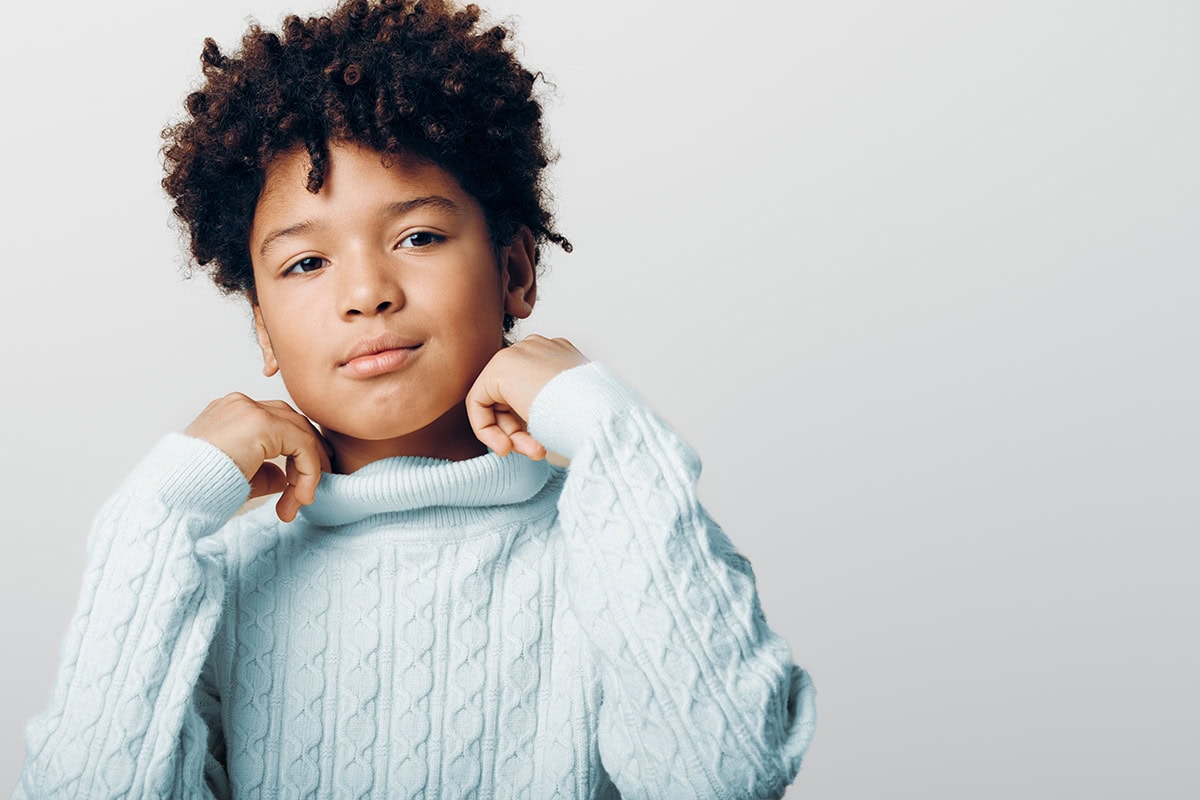
Some children put on a new sweater just once and then never want to see it again. Others cut the tag out of every piece of clothing as soon as they get it, or refuse to wear certain fabrics at all. For many children with autism, this is due to skin that perceives touch much more intensely than usual.
Why does the skin react so strongly?
For many people on the autism spectrum, the nervous system processes touch more intensely than usual. A tag at the nape of the neck, a seam on the toe, or a fabric that feels completely normal to others can become a constant itching sensation that doesn’t stop all day. This tactile hypersensitivity is well documented and by no means limited to tops. It often involves tags in underwear, tight cuffs, or materials like wool that prickle against the skin. For the child, this sensation is very real and constantly present—even if no one else notices it.
What does that look like in everyday life?
This is often most evident in the morning while getting dressed. One child refuses to zip up their jacket because the zipper scratches their chin. Another keeps taking off their socks because the seam is rubbing against their toes. And sometimes a tantrum seems to come out of nowhere, when in fact it was the jeans that had been pinching the back of the knee for hours. Anyone who thinks this is just acting and reacts with pressure runs the risk of making things unnecessarily more complicated and difficult.
What makes getting dressed easier?
Many issues can be alleviated with small adjustments. Seamless socks, printed labels instead of sewn-in ones, and soft cotton already take a lot of the discomfort away, as do pants with an elastic waistband that doesn’t have a scratchy rubber edge. It often helps to wash new clothes once before the child wears them, because the fabric becomes softer afterward. And if a child wants to wear the same T-shirt for months on end, that’s rarely a problem that needs to be addressed. Most of the time, the child has found a solution that works for their body. If you let your child help decide what feels good while shopping, you’ll avoid a lot of conflicts later on.
Want to see more from JuCare? Would you like to better understand your child or apply for therapy? Just click here to learn more or get in touch. If you’d like to receive regular, in-depth insights about autism, feel free to sign up for our newsletter.